
The Jordan–Syria Border and the Rise of a Regional Drug Economy: History, Captagon, and Escalating Conflict

A Border Under Siege
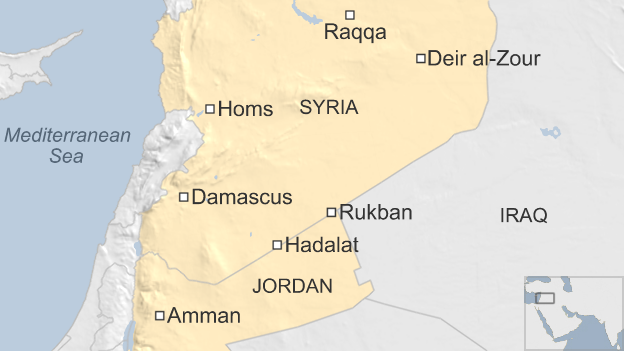
The northern frontier between Jordan and Syria has increasingly become one of the most volatile drug-trafficking corridors in the Middle East. What was once a relatively quiet desert border has, over the past decade, transformed into a militarised zone marked by air strikes, armed clashes, and transnational criminal networks. Jordan’s December 2025 air strikes on drug and arms smugglers inside southern Syria represent not an isolated incident, but the culmination of years of escalating pressure generated by the region’s booming illicit drug economy—particularly the production and trafficking of Captagon.
The strikes, carried out by Jordanian F-16 fighter jets, targeted what Amman described as “launch points” for smuggling operations, destroying factories, workshops, farms, and abandoned military installations used by traffickers. According to Jordanian authorities, these operations were based on precise intelligence and coordinated with regional partners, underscoring how the drug trade has evolved from a criminal nuisance into a strategic national security threat.
Historical Roots: Smuggling Before the Syrian War
Smuggling across the Jordan–Syria border is not a new phenomenon. For decades, porous borders in the Levant facilitated informal trade in livestock, fuel, cigarettes, and consumer goods. These networks often relied on tribal, familial, and commercial ties spanning both sides of the frontier. While technically illegal, such activities were largely tolerated or loosely regulated, posing little threat to state security.
However, this changed dramatically after 2011, when Syria’s uprising spiralled into a prolonged civil war. The collapse of state authority in large parts of southern Syria—particularly in provinces like Daraa and Suwayda—created an enabling environment for organised crime. Traditional smuggling routes were repurposed for weapons, people, and eventually, industrial-scale drug trafficking.
War Economy and the Birth of Syria’s Drug Industry
As Syria’s economy collapsed under war, sanctions, and infrastructure destruction, illicit economies became essential survival mechanisms for armed groups and political elites alike. By the late 2010s, Captagon—a synthetic amphetamine-type stimulant—had emerged as the backbone of this shadow economy.
Originally a pharmaceutical drug developed in the 1960s, Captagon had long since been banned. In wartime Syria, however, it was reborn as a cheap, highly addictive stimulant produced in clandestine factories. Its appeal lay in its low production costs, ease of transport, and massive demand in regional markets, particularly in the Gulf.
Analysts and international investigators estimate that by the early 2020s, Syria had become the world’s largest producer of Captagon. Before the removal of President Bashar al-Assad in December 2024, the drug trade was widely believed to be the regime’s largest export and a critical source of foreign currency. Although Damascus consistently denied involvement, evidence pointed to networks involving regime-linked militias, business elites, and allied armed groups.
Jordan’s Strategic Position—and Vulnerability
Jordan’s geography places it squarely in the path of Captagon flows from southern Syria to Saudi Arabia and other Gulf states. As a relatively stable country with strong security institutions, Jordan became both a transit route and a frontline state.
Over time, smuggling operations grew more aggressive and sophisticated. Jordanian border guards began encountering heavily armed traffickers using military-grade weapons, drones, night-vision equipment, and coordinated assaults. These were no longer small-time smugglers but organised groups capable of engaging state forces.
By the early 2020s, Jordan openly reframed drug trafficking as a national security threat. The kingdom reported dozens of armed clashes along the border and announced record-breaking seizures of narcotics, particularly Captagon pills numbering in the tens of millions.
Escalation to Cross-Border Strikes
Jordan’s December 2025 air strikes reflect a significant escalation in its counter-narcotics strategy. According to the Jordan News Agency (Petra), the military “neutralised a number of arms and drug traffickers” and destroyed factories and workshops inside Syrian territory. Syrian media and monitoring groups reported intense bombardment in Suwayda’s southern and eastern countryside, targeting farms, smuggling routes, and abandoned military barracks once used by the former al-Assad regime.
The participation of fighter jets and helicopters highlights how Jordan now views drug infrastructure as legitimate military targets. Importantly, the strikes were reportedly coordinated with regional partners—an implicit acknowledgment that the Captagon crisis is transnational and cannot be addressed by Jordan alone.
Regional Implications: Drugs, Diplomacy, and Power
The Captagon trade has reshaped regional politics. Gulf states, flooded with synthetic drugs, have pressured Syria and Lebanon to curb production and trafficking. Intelligence cooperation between countries like Iraq, Lebanon, and Jordan has led to the destruction of factories and high-profile arrests.
Yet the problem persists because the drug economy is deeply embedded in post-war Syria’s political and economic structures. With formal industries devastated and reconstruction stalled, illicit trade remains one of the few reliable revenue sources for local power brokers.
Jordan’s strikes therefore sit at the intersection of law enforcement, military strategy, and regional diplomacy. They also raise difficult questions about sovereignty, the limits of cross-border action, and the long-term consequences of militarising counter-narcotics operations.
Human and Social Costs
Beyond geopolitics, the drug crisis carries profound social consequences. Captagon addiction has surged across the Middle East, straining health systems, destabilising families, and fuelling crime. Jordan, traditionally less affected by large-scale drug consumption, has seen rising domestic use alongside its role as a transit state.
In southern Syria, communities like those in Suwayda are caught between traffickers, foreign air strikes, and economic desperation. Farms and rural infrastructure—already weakened by years of conflict—are increasingly drawn into the drug economy, either willingly or under coercion.
Conclusion: A Conflict Beyond Drugs
The Jordan–Syria border drug problem is not merely about narcotics; it is a symptom of prolonged war, economic collapse, and fragmented authority. Jordan’s air strikes mark a new phase in a conflict where drugs, arms, and geopolitics are tightly intertwined.
Without meaningful economic recovery in Syria, strengthened regional cooperation, and sustained international engagement, the Captagon trade is unlikely to disappear. Instead, it risks becoming a permanent feature of the post-war Middle East—one that blurs the line between criminal enterprise and armed conflict, and places border regions like northern Jordan at the centre of a long, unresolved struggle.
Related posts:
 Jordan Conducts Airstrikes on Suspected Iranian-Backed Drug Smugglers in Syria
 Jordan Foils Armed Plot by Infiltrators from Syria Linked to Pro-Iranian Militias
 Foiling Drug Smugglers at Border with Israel Sparks Intense Gunfire and Arrests In Egypt
 US Offers $5m Bounty For Info on Mexican Drug Cartels