Is South Africa’s Doctor Deal with Cuba Really Out of Touch and Out of Time?

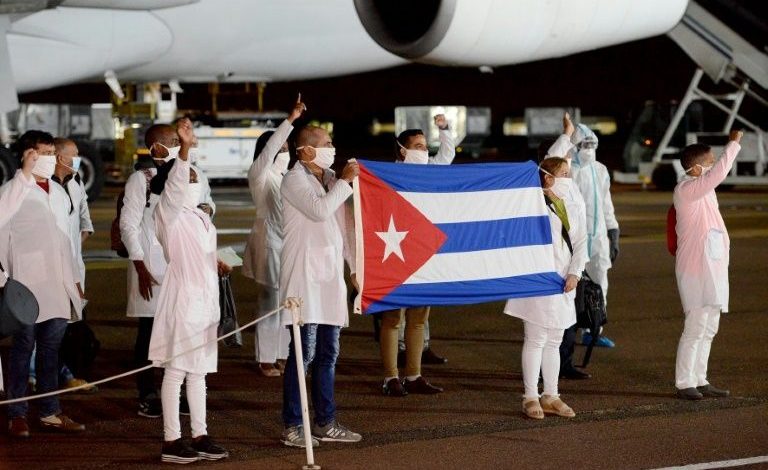
South Africa’s decades-long doctor training deal with Cuba—once hailed as a revolutionary response to apartheid-era inequality—has now become a topic of heated debate. Critics say the Nelson Mandela-Fidel Castro (NMFC) Medical Training Programme has outlived its usefulness, drained provincial budgets, and failed to match the evolving needs of South Africa’s overstretched public health system.
So why is the programme still running—especially when it could be costing three times more than local training options?
A Political Symbol, Now a Practical Burden?
Launched in 1996, just two years after South Africa’s democratic transition, the NMFC programme was built on solidarity with Cuba and a desperate need to expand the country’s pool of doctors—particularly in rural and under-served areas. The idea was simple: send South African students to Cuba, immerse them in primary healthcare and preventive medicine, and return them as community-focused doctors.
Nearly 30 years later, that dream is facing some hard realities.
Today, only two provinces—Gauteng and North West—are still sending students under the programme. Others have quietly scaled back or exited, citing costs, logistical nightmares, and a lack of data showing real-world impact. Gauteng alone is grappling with doctor payment delays, oncology backlogs, and corruption investigations—yet it continues to spend millions sending students abroad instead of investing in home-grown talent.
Budget Black Hole: What Does It Really Cost?
There is no single publicly available report that outlines the full cost of the NMFC programme over its lifespan. But according to estimates shared in parliament and media reports, the numbers are staggering:
- Up to US$15,900 per student per year for tuition in Cuba.
- Extra costs for accommodation, food, medical insurance, flights, and an 18-month clinical bridging programme back home.
- Training duration: 1 year of Spanish, 5 years of Cuban training, 18 months in South Africa.
Compare that to the cost of training a doctor entirely in South Africa—estimated to be up to three times cheaper—and the financial case for the Cuba programme becomes shaky at best.
Even more concerning is the lack of follow-up tracking: As of late 2022, there was no reliable information on where many of these graduates ended up, or whether they fulfilled their service obligations in the public sector.
Are We Still Solving the Right Problem?
In 1996, South Africa’s medical schools were few, urban-focused, and often inaccessible to students from rural or underprivileged backgrounds. Today, the situation is very different:
- The country now has 11 medical schools, with more in development.
- Curricula have shifted to emphasize primary healthcare and community exposure.
- Most new medical students are Black South Africans, many from no-fee public schools.
In other words, local capacity has grown—yet the NMFC programme persists. According to Professor Shabir Madhi, dean of Wits Health Sciences, “The programme is now redundant. Government is training more doctors than it can even employ. The problem isn’t the pipeline—it’s the bottleneck.”
Doctors Without Jobs?
Despite increasing graduate numbers, many young South African doctors are struggling to find placements in the public health system. Budget constraints, mismanagement, and failing provincial health departments mean that qualified doctors are being left idle—even as hospitals and pharmacies face severe staffing shortages.
“It’s a heartbreaking contradiction,” says one rural health advocate. “We’re crying for doctors in clinics, yet medical graduates are sitting at home waiting for jobs.”
This paradox underscores a growing sentiment: the problem is not just training more doctors, but building a functional system that can employ and support them.
A Missed Opportunity—or a Model to Learn From?
To be fair, the NMFC programme has produced inspiring success stories. Doctors like Dr. Sanele Madela, who trained in Cuba and now serves his home community in Dundee, argue that the programme still matters—not just as a tool to boost numbers, but as a way to transform communities.
“When you see a Black doctor speaking your language, understanding your context—that changes everything,” he says. “You can’t put a price on that.”
But even supporters acknowledge that the model needs rethinking, especially if it no longer fits South Africa’s current health system needs or budget realities.
What’s the Way Forward?
Health experts agree: it’s time for an independent, transparent evaluation of the NMFC programme.
Key questions must be answered:
- How many doctors has the programme really produced?
- At what cost?
- Are they delivering the impact promised—especially in rural areas?
- Could the same funds be used to strengthen local training infrastructure, expand family medicine, or fund community health placements?
According to Professor Richard Cooke of Wits University: “Even if the programme met its targets, it’s not been cost-efficient. What we need now is to invest smarter—in research, training infrastructure, and health system science.”
Final Thoughts
The NMFC medical programme was born from a spirit of international solidarity and hope. But decades later, sentiment must give way to strategy.
In an era of austerity, failing hospitals, and unemployed doctors, every cent counts. And unless South Africa’s doctor deal with Cuba can prove its value—in numbers, in impact, and in alignment with national priorities—it may be time to finally bring it to a close.