
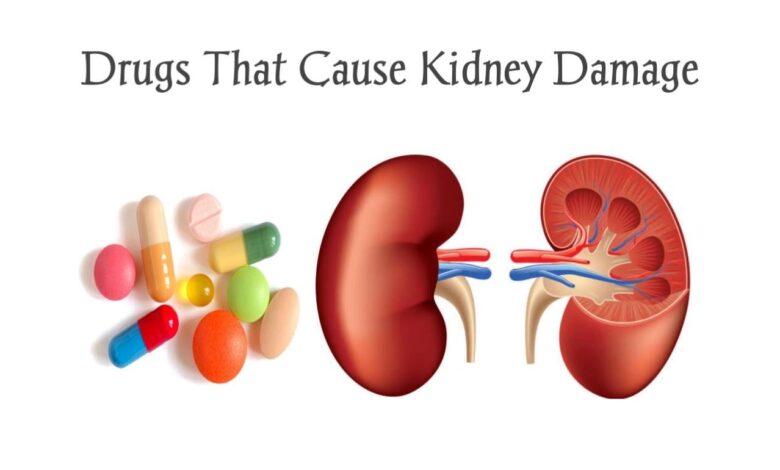
Drugs can cause acute renal injury, intrarenal obstruction, interstitial nephritis, nephrotic syndrome, and acid-base and fluid electrolytes disorders. Certain drugs can cause alteration in intraglomerular hemodynamics, inflammatory changes in renal tubular cells, leading to acute kidney injury and renal scarring.
Medications are a relatively common cause of acute kidney injury, especially in hospitalized patients who are exposed to numerous agents. Drug-related acute tubular/tubulointerstitial injury is the most common cause of AKI associated with these agents. The toxic effects of drugs and their renal handling often lead to various forms of AKI.
Prospective cohort studies of AKI have documented the frequency of drug-induced nephrotoxicity to be approximately 14-26% in adult populations. Nephrotoxicity is also a significant concern in pediatrics with 16% of hospitalized AKI events being attributable primarily to a drug .
What are the top 10 drugs that cause kidney damage?
There are several drugs that can cause liver damage from over the counter medication to prescription medicines. The table below provides a full list of all medications that can damage your kidney:
| DRUG CLASS/DRUG(S) | EXAMPLES AND MECHANISM OF RENAL INJURY | |
| Analgesics | ||
| Acetaminophen, aspirin | Chronic interstitial nephritis | |
| Nonsteroidal anti-inflammatory drugs | Acute interstitial nephritis, altered intraglomerular hemodynamics, chronic interstitial nephritis, glomerulonephritis | |
| Antidepressants/mood stabilizers | ||
| Amitriptyline (Elavil*), doxepin (Zonalon), fluoxetine (Prozac) | Rhabdomyolysis | |
| Lithium | Chronic interstitial nephritis, glomerulonephritis, rhabdomyolysis | |
| Antihistamines | ||
| Diphenhydramine (Benadryl), doxylamine (Unisom) | Rhabdomyolysis | |
| Antimicrobials | ||
| Acyclovir (Zovirax) | Acute interstitial nephritis, crystal nephropathy | |
| Aminoglycosides | Tubular cell toxicity | |
| Amphotericin B (Fungizone*; deoxycholic acid formulation more so than the lipid formulation) | Tubular cell toxicity | |
| Beta lactams (penicillins, cephalosporins) | Acute interstitial nephritis, glomerulonephritis (ampicillin, penicillin) | |
| Foscarnet (Foscavir) | Crystal nephropathy, tubular cell toxicity | |
| Ganciclovir (Cytovene) | Crystal nephropathy | |
| Pentamidine (Pentam) | Tubular cell toxicity | |
| Quinolones | Acute interstitial nephritis, crystal nephropathy (ciprofloxacin [Cipro]) | |
| Rifampin (Rifadin) | Acute interstitial nephritis | |
| Sulfonamides | Acute interstitial nephritis, crystal nephropathy | |
| Vancomycin (Vancocin) | Acute interstitial nephritis | |
| Antiretrovirals | ||
| Adefovir (Hepsera), cidofovir (Vistide), tenofovir (Viread) | Tubular cell toxicity | |
| Indinavir (Crixivan) | Acute interstitial nephritis, crystal nephropathy | |
| Benzodiazepines | Rhabdomyolysis | |
| Calcineurin inhibitors | ||
| Cyclosporine (Neoral) | Altered intraglomerular hemodynamics, chronic interstitial nephritis, thrombotic microangiopathy | |
| Tacrolimus (Prograf) | Altered intraglomerular hemodynamics | |
| Cardiovascular agents | ||
| Angiotensin-converting enzyme inhibitors, angiotensin receptor blockers | Altered intraglomerular hemodynamics | |
| Clopidogrel (Plavix), ticlopidine (Ticlid) | Thrombotic microangiopathy | |
| Statins | Rhabdomyolysis | |
| Chemotherapeutics | ||
| Carmustine (Gliadel), semustine (investigational) | Chronic interstitial nephritis | |
| Cisplatin (Platinol) | Chronic interstitial nephritis, tubular cell toxicity | |
| Interferon-alfa (Intron A) | Glomerulonephritis | |
| Methotrexate | Crystal nephropathy | |
| Mitomycin-C (Mutamycin) | Thrombotic microangiopathy | |
| Contrast dye | Tubular cell toxicity | |
| Diuretics | ||
| Loops, thiazides | Acute interstitial nephritis | |
| Triamterene (Dyrenium) | Crystal nephropathy | |
| Drugs of abuse | ||
| Cocaine, heroin, ketamine (Ketalar), methadone, methamphetamine | Rhabdomyolysis | |
| Herbals | ||
| Chinese herbals with aristocholic acid | Chronic interstitial nephritis | |
| Proton pump inhibitors | ||
| Lansoprazole (Prevacid), omeprazole (Prilosec), pantoprazole (Protonix) | Acute interstitial nephritis | |
| Others | ||
| Allopurinol (Zyloprim) | Acute interstitial nephritis | |
| Gold therapy | Glomerulonephritis | |
| Haloperidol (Haldol) | Rhabdomyolysis | |
| Pamidronate (Aredia) | Glomerulonephritis | |
| Phenytoin (Dilantin) | Acute interstitial nephritis | |
| Quinine (Qualaquin) | Thrombotic microangiopathy | |
| Ranitidine (Zantac) | Acute interstitial nephritis | |
| Zoledronate (Zometa) | Tubular cell toxicity |